# Fast Arlington CPR Training: Earn Your BLS & ACLS Card
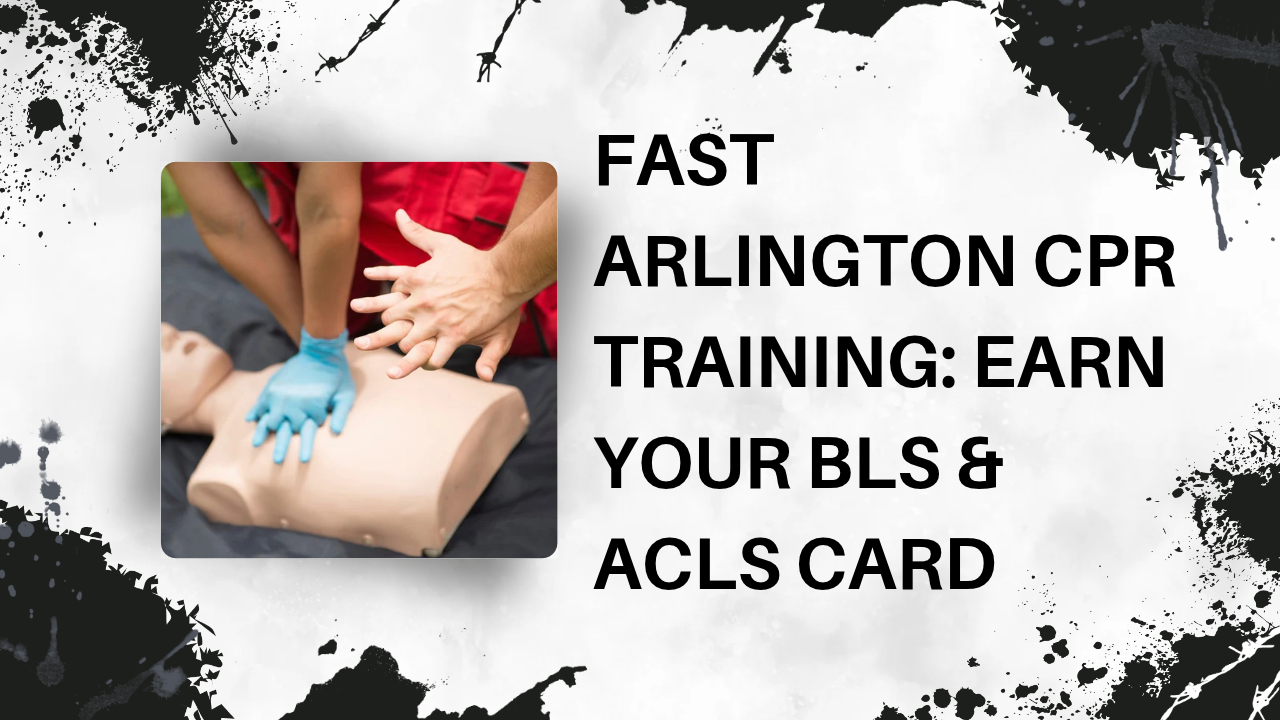
If you work in healthcare in Tarrant County, you already know how demanding your schedule can be. Between 12-hour shifts, emergency call rotations, continuing education requirements, and personal commitments, your calendar leaves very little wiggle room. The moment your clinical manager sends an email reminder that your credentials are about to expire, a sense of urgency sets in. Finding high-yield, flexible **[CPR Training in Arlington](https://cprcart.com/locations/virginia/arlington/)** becomes a top priority—but the thought of surrendering a full day off to sit in a standard classroom is exhausting.
Fortunately, earning or renewing your clinical credentials no longer requires sacrificing an entire weekend. Emergency medical training has transformed dramatically, matching the high-speed reality of modern healthcare. By shifting cognitive study to an interactive digital platform and streamlining hands-on testing into a rapid skill verification, you can maintain full compliance on your own terms.
## The Problem with Old-School Certification Courses
For decades, getting certified meant booking a full-day seminar weeks in advance. You had to show up early, sit through long slide decks, watch dated video lectures, and wait your turn in line while groups practiced on basic equipment. For experienced nurses, physicians, and paramedics who perform resuscitation maneuvers routinely, sitting through introductory lectures year after year felt redundant and inefficient.
Modern healthcare facilities demand a smarter approach. Providers need a system that evaluates their actual competence without wasting valuable hours on information they have already mastered. By moving theoretical education into a self-paced digital environment, you gain complete control over how and when you learn, allowing you to breeze through familiar material and focus deeply on complex updates.
## The AHA HeartCode® Model: Complete Flexibility Meets Clinical Rigor
The foundation of this modern training approach is the official American Heart Association (AHA) HeartCode® module. Designed to deliver uncompromising clinical standards while respecting your busy schedule, this blended learning format breaks the process down into two fast, stress-free stages:
1. Self-Paced Web-Based Learning: You complete the online coursework wherever and whenever it fits into your day. Using dynamic learning algorithms, computer-based patient simulations, and real-time clinical scenarios, the digital platform adapts to your individual background. If you know the algorithms cold, you can move quickly; if you need a quick refresher on cardiac pharmacology or pediatric drug dosages, you can review at your own pace.
2. The 30-Minute Hands-On Skill Station: Once you finish the web modules and print your certificate of completion, you stop by a local testing facility for a rapid physical evaluation. Instead of waiting around for manual reviews, you perform compressions and ventilations on computerized, voice-assisted manikins. These smart devices deliver immediate, objective data on your compression depth, speed, chest recoil, and mask ventilation technique.
Because the physical evaluation is focused entirely on objective skill execution, most students finish their practical check in under 30 minutes. Once complete, your official digital credentials are issued, giving you instant verification for hospital compliance.
**Earning Your BLS Card Without Disrupting Your Shift Work**
Basic Life Support is the essential foundation of clinical patient safety. Whether you work at a major hospital system, a surgical center, a dental clinic, or an outpatient facility, holding a valid **[BLS Card](https://cprcart.com/classes/bls/)** is a mandatory prerequisite for direct patient care.
The HeartCode BLS curriculum focuses on core emergency protocols:
• Executing high-quality chest compressions for adult, pediatric, and infant patients
• Coordinating multi-rescuer resuscitation efforts and team communications
• Operating an Automated External Defibrillator (AED) quickly and safely
• Delivering effective bag-valve-mask (BVM) ventilation while minimizing interruptions
• Managing acute airway obstructions in conscious and unconscious victims
By handling the theoretical study online and completing your physical evaluation during a quick 30-minute session, nurses, radiology technicians, physical therapists, and dental hygienists can complete their CPR Certification quickly and get right back to their patients.
**Upgrading Your Credentials with an ACLS Card**
For medical professionals working in cardiac cath labs, intensive care units, emergency rooms, or trauma centers, basic interventions are only the first step. Possessing an active **[ACLS Card](https://cprcart.com/classes/acls/)** (Advanced Cardiovascular Life Support) demonstrates that a clinician is fully equipped to evaluate, lead, and execute complex resuscitation algorithms during life-threatening cardiovascular emergencies.
The ACLS framework builds directly upon basic life support skills, introducing advanced diagnostic reasoning, cardiac rhythm interpretation, electrical therapies, and emergency pharmacology. Key focus areas include:
• Systematic approaches to initial clinical assessment (A-B-C-D-E protocol)
• Management of cardiac arrest rhythms, including Ventricular Fibrillation, Pulseless VT, Asystole, and PEA
• Treatment algorithms for acute bradycardias and tachycardias
• Immediate interventions for Acute Coronary Syndromes (ACS) and acute ischemic stroke
• High-performance resuscitation team leadership and clear communication dynamics
The HeartCode ACLS digital module allows physicians, nurse practitioners, physician assistants, and paramedics to practice complex telemetry cases online before executing algorithms smoothly on smart feedback manikins.
**Specialized Pediatric Care: Claiming Your PALS Card**
Caring for pediatric patients requires specialized assessment tools, delicate physiological awareness, and precise emergency dosing. Earning a **[PALS Card](https://cprcart.com/classes/pals/)** (Pediatric Advanced Life Support) verifies that a provider is prepared to manage critical respiratory distress, shock, and cardiac events in infants and children.
Because pediatric cardiac arrest is frequently secondary to respiratory failure or progressive shock, early recognition is critical. The PALS training curriculum emphasizes early identification and proactive intervention:
• Systematic assessment of pediatric patients using the Evaluated-Categorize-Intervene approach
• Differentiating and treating upper airway, lower airway, lung tissue, and disordered breathing conditions
• Recognizing compensated vs. hypotensive shock states and administering fluid resuscitation
• Weight-based medication dosing and specialized vascular access techniques
• Post-resuscitation stabilization and pediatric team coordination
Pediatric nurses, pediatricians, emergency medical providers, and respiratory therapists rely on the blended HeartCode PALS module to fulfill employer credentialing mandates without missing a shift.
**Four Simple Steps to Complete Your Credentials Today**
Updating your emergency qualifications should fit into your life, not overhaul it. If you need to renew your credentials or earn a new certification in the DFW metroplex, the process is straightforward:
1. Pick Your Course: Select BLS, ACLS, or PALS based on your career
requirements.
2. Complete the Online Modules: Work through the AHA HeartCode adaptive
learning course on your computer or tablet.
3. Schedule Your 30-Minute Skill Session: Visit a convenient local
facility to complete your automated physical evaluation.
4. Download Your eCard: Receive your official, digitally verifiable
American Heart
Association eCard directly in your inbox the same day.
Take the headache out of credential renewal, protect your schedule, and stay fully prepared for any emergency with a modern, efficient approach to life-support education.